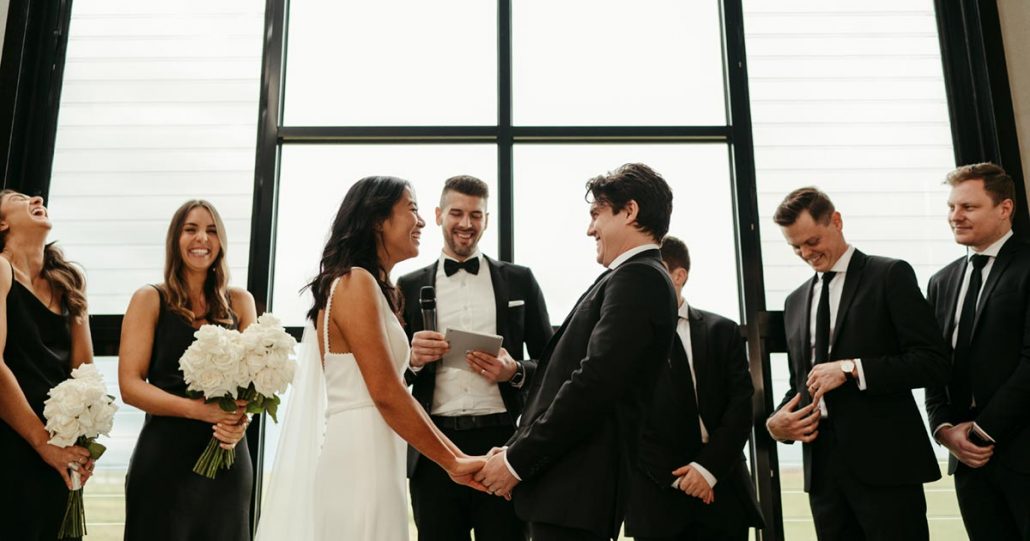
A wedding ceremony in Melbourne often looks simple from the outside. Everyone’s relaxed, things flow nicely, and it all feels quite natural.
But behind that, there’s a clear structure holding everything together.
If you’re planning your wedding, understanding what actually happens on the day makes a big difference. It takes away a lot of the uncertainty and helps you enjoy the moment rather than worrying about what comes next.
A good celebrant will guide you through it all, but having a clear idea beforehand helps you feel more prepared and at ease.
Understanding the Flow of a Wedding Ceremony
Every ceremony is a bit different, but most follow a similar flow.
That structure isn’t there to make things formal – it’s there to keep everything running smoothly and make space for the moments that matter.
In Melbourne, ceremonies tend to be:
- Relaxed but well organised
- Personal without feeling overdone
- Balanced between legal requirements and genuine moments
Once you understand the flow, the whole thing feels far less overwhelming.
Arrival and Guest Seating
Things really start before the ceremony officially begins.
Guests arrive, find their seats, and settle in. There’s usually music playing in the background, and you can feel the atmosphere building.
For most couples, this is when the nerves kick in – which is completely normal.
The Entrance
The entrance is one of those moments everyone remembers.
Traditionally, one partner walks down the aisle, but these days there’s no single way to do it. Some couples walk in together, some involve family, and others keep it simple.
There’s no right or wrong here – it just needs to feel natural to you.
Opening Words from the Celebrant
Once everyone is in place, the celebrant begins.
This sets the tone for the entire ceremony. A good celebrant will:
- Welcome everyone properly
- Acknowledge the significance of the day
- Introduce your story in a natural way
It’s not just a formality — it’s where everything starts to feel real.
The Legal Components
In Australia, there are a few legal requirements that need to be included.
These include:
- The Monitum (a legal statement about marriage)
- The official vows
A professional celebrant will handle this in a way that feels seamless, so it doesn’t interrupt the flow of the ceremony.
Done properly, it blends in rather than standing out.
Personal Story and Readings
This is where the ceremony becomes truly yours.
Your celebrant will usually share your story – how you met, what’s shaped your relationship, and what makes it work.
Some couples also include readings from friends or family. These can be heartfelt, light, or even a bit funny, depending on the tone you want.
This part is often what guests connect with the most.
The Vows
The vows are the heart of the ceremony.
Whether you write your own or keep them more traditional, this is the moment that brings everything together.
It doesn’t need to be perfect – it just needs to be genuine.
That’s what people remember.
The Ring Exchange
After the vows comes the ring exchange.
It’s a simple step, but it carries a lot of meaning. The celebrant will guide you through the wording, and it usually feels quite calm after the emotion of the vows.
The Declaration of Marriage
This is the official moment.
The celebrant declares you married, and you can feel the shift straight away — from ceremony to celebration.
There’s usually a bit of laughter, applause, and a sense of relief as everything settles in.
Signing the Register
After that, the legal paperwork is signed.
This involves:
- The couple
- Two witnesses
- The celebrant
While this is happening, guests typically relax, chat, or listen to music. It’s a quieter moment, but an important one.
The First Kiss and Walk Back Down the Aisle
The ceremony wraps up with the first kiss and walking back down the aisle together.
It’s a short moment, but it’s one people remember. Everything feels lighter, more relaxed, and you’re officially into the celebration.

Why Structure Matters More Than You Think
From the outside, a wedding ceremony feels natural and easy.
That feeling usually comes from having the right structure in place.
When everything flows properly:
- Guests stay engaged
- You don’t feel rushed or unsure
- The whole ceremony feels effortless
Without that structure, things can feel a bit disjointed.
Working with the Right Celebrant
The celebrant plays a bigger role than most people expect.
It’s not just about reading words – it’s about:
- Keeping the pace right
- Reading the room
- Making sure everything runs smoothly on the day
- Helping you feel comfortable throughout
An experienced Melbourne celebrant knows how to balance professionalism with a relaxed, natural approach – which is exactly what most couples want.
Ready to plan a ceremony that feels effortless and personal?
Conclusion
A Melbourne wedding ceremony follows a clear structure, but within that, there’s plenty of room to make it your own.
Once you understand how it all fits together, the whole experience feels much more manageable.
With the right preparation and the right celebrant, the ceremony becomes more than just part of the day – it becomes something you genuinely enjoy and remember.
Frequently Asked Questions
How long does a wedding ceremony usually take?
Most ceremonies in Melbourne run for around 20 to 30 minutes, depending on what’s included.
Are all ceremonies the same?
No. The structure is similar, but the tone and content can be completely personalised.
Do we have to write our own vows?
Not at all. You can write your own or use traditional vows — whatever feels right for you.
What are the legal requirements in Australia?
You need to include the Monitum, legal vows, and sign the marriage register with witnesses.
Can we change the order of the ceremony?
Yes, most parts can be adjusted, as long as the legal elements are included.